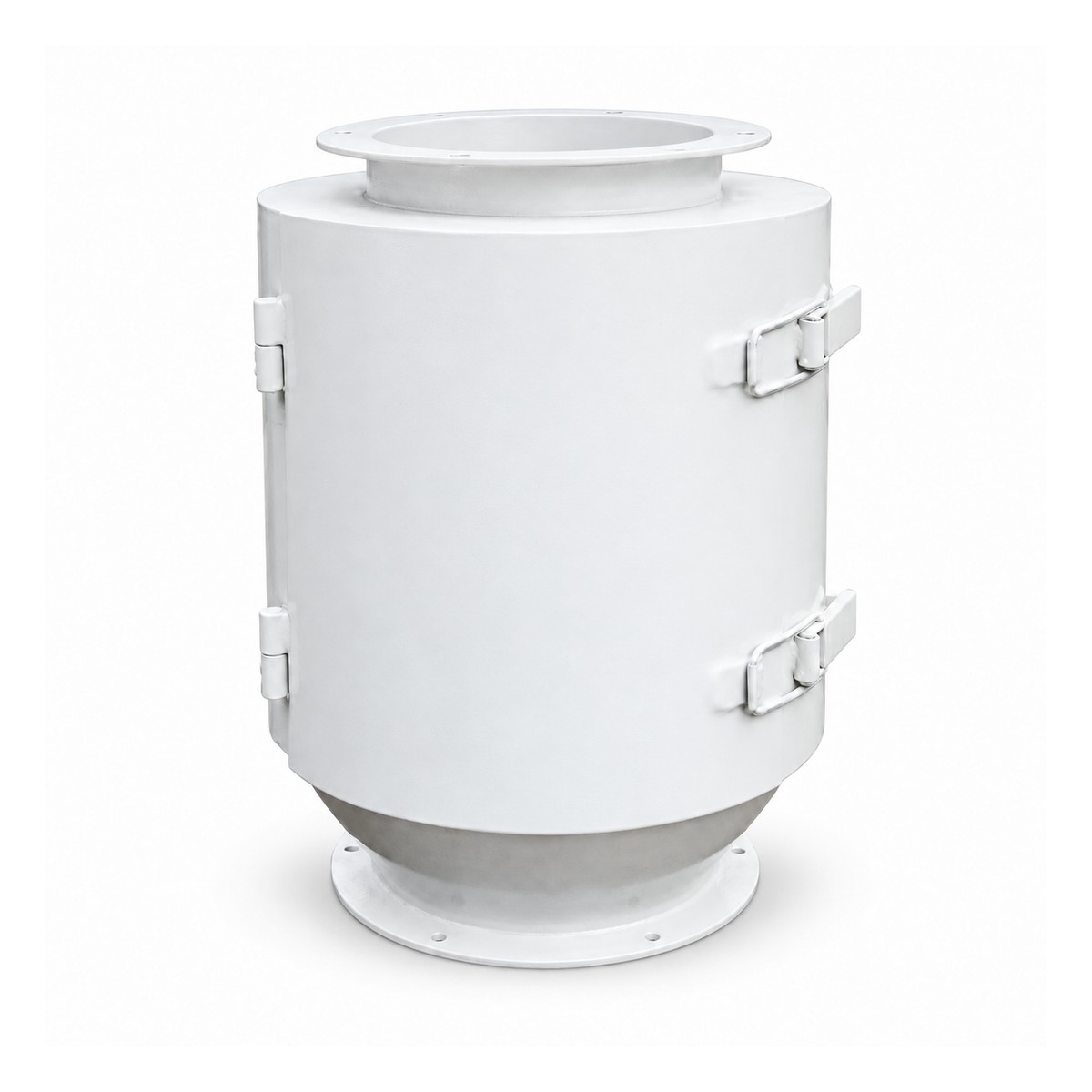
TCXT Magnetic Separator
Removes ferrous contamination from a grain stream before downstream processing. Five inlet sizes cover different material flows.
Specifications and configurations
| Model | Capacity (t/h) | Magnetic induction (GS) | Inlet diameter (mm) | Iron removal | Overall size (m) |
|---|---|---|---|---|---|
| TCXT15 | 5–15 | 5000 | 150 | 99.9% | 0.4×0.7 |
| TCXT20 | 10–30 | 5000 | 200 | 99.9% | 0.5×0.7 |
| TCXT25 | 25–50 | 5000 | 250 | 99.9% | 0.5×0.9 |
| TCXT30 | 45–70 | 5000 | 300 | 99.9% | 0.6×0.9 |
| TCXT40 | 60–100 | 5000 | 400 | 99.9% | 0.7×1 |
Removal performance depends on material flow and the ferrous contamination presented to the magnet.
On small screens, scroll the table to see all specifications.
Choose for the operating duty
Match the inlet diameter to the conveying route and provide grain throughput. Allow safe access for magnet inspection and removal of collected iron.
- Unpowered magnetic separation.
- Inlet diameters from 150 to 400 mm.
- Regular cleaning is required to remove accumulated ferrous material.
Plan the installation
Position in the line
Identify the upstream cleaner and downstream equipment on the process diagram.
Feed and discharge
Send material flow and inlet/outlet elevations. Keep inspection and cleaning access clear.
Aspiration
Provide the existing fan duty and duct layout where aspiration is required.
Site conditions
Specify electrical supply and installation space for the selected machine.
Existing equipment and spare parts
For a replacement, send the nameplate, a photograph, connection dimensions and the required duty. For individual parts, include dimensions and the machine serial number.
Explore spare partsDiscuss your requirements
Match the inlet diameter to the conveying route and provide grain throughput. Allow safe access for magnet inspection and removal of collected iron.
WhatsApp Farivo